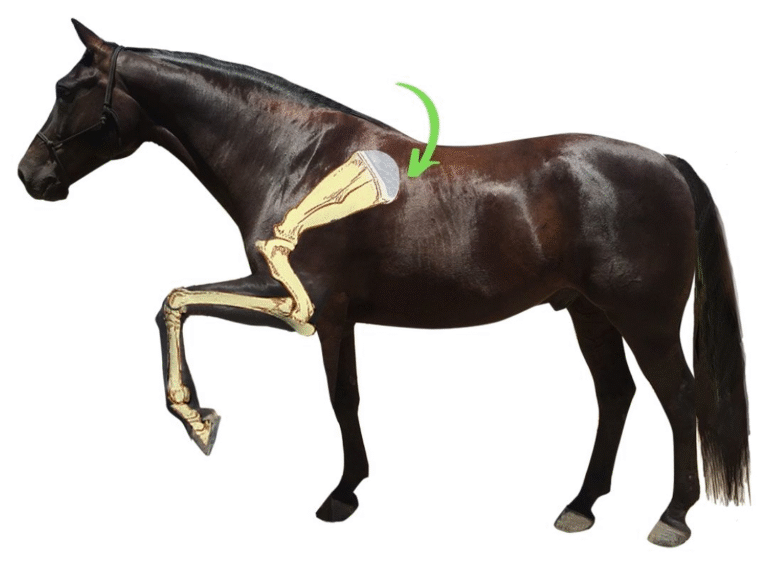

General anatomy of the spine and growth : the importance of adapting the tree to morphological evolution
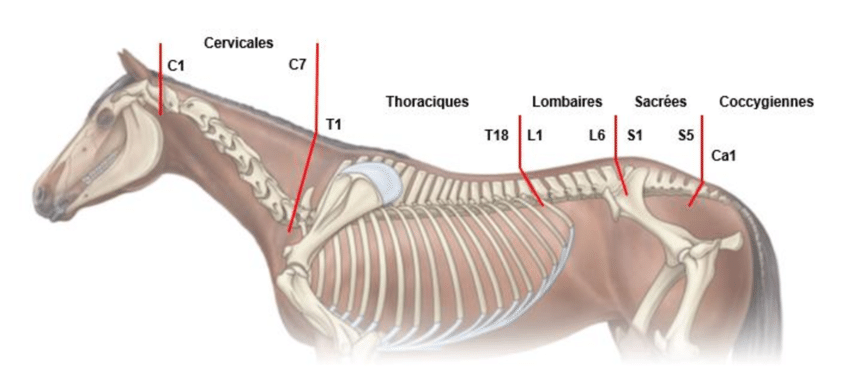
A horse’s spine consists of 54 vertebrae. It extends from the skull to the tail and plays a major role in the mobility and stability of the back. Understanding how it works allows the saddle tree to be adapted to the contours of the horse’s back.
What is the structure of a horse's spine?
The spine is made up of several segments:
- The cervical vertebrae: 7 vertebrae located in the neck
- The thoracic vertebrae: 18 vertebrae that make up the back.
- The lumbar vertebrae: 6 vertebrae in the lumbar region.
- The sacral vertebrae: five fused vertebrae that form the sacrum.
- The coccygeal vertebrae: 18 vertebrae that make up the tail.
This structure supports the rider's weight and enables the horse to perform its basic movements.
Why is spinal growth important?
The development of the spine continues throughout the first eight years of a horse’s life. The six thoracic vertebrae that make up the withers, as well as the cervical vertebrae atlas and axis, are the last to reach full maturity.
How does a horse’s physical development affect the fit of the saddle?
From one season to the next, a horse’s physique changes. Its musculature and body shape evolve, sometimes significantly. This affects the fit of the saddle. An ill-fitting saddle tree can cause discomfort or even injury. It is therefore essential to have your saddle tree checked regularly.
What are the criteria for a properly fitted saddle?
There are many factors to consider when it comes to a horse's well-being:
- Withers height: The saddle must allow for adequate clearance to prevent pressure on the withers.
- Spine clearance: The space between the saddle panels must allow for sufficient clearance for the spine.
- Shoulder structure: The saddle must not restrict the movement of the shoulder blade.
Precise adjustment of the saddle tree is therefore essential to meet these criteria.
The consequences of a poorly fitted saddle
Using an unsuitable saddle can cause:
- Back pain: excessive pressure on certain areas of the back
- Musculoskeletal problems: changes in natural movement
- Defensive behaviors: negative reactions from the horse during work.
It is therefore essential to check that the saddle fits properly to avoid these problems.
How can you ensure that the saddle fits properly?
To ensure the saddle fits perfectly:
- Regular check-ups: Consult a professional to ensure the saddle fits properly.
- Observing the horse: Watch for signs of discomfort or pain.
- Ongoing adjustment: Adjust the saddle to the horse’s changing body shape.
These measures will contribute to the horse's well-being and performance.
What are the benefits of a properly fitted saddle?
A properly fitted saddle offers many benefits:
- Enhanced comfort: Reduced pressure points.
- Best performance: Optimized freedom of movement.
- Injury prevention: Reduced risk of back problems.
Investing in a well-fitting saddle is therefore essential for the horse's health.
The key factor is adapting the saddle tree to the horse’s physical changes. A thorough understanding of the spine’s anatomy, along with constant adjustments to the saddle, ensures the horse’s well-being and performance.
Key takeaways:
- A horse's spine consists of 54 vertebrae.
- It takes the first 8 years to fully mature.
- A properly fitted saddle prevents pain and maximizes performance.
To learn more, check out this detailed article on the how a horse's back works.