
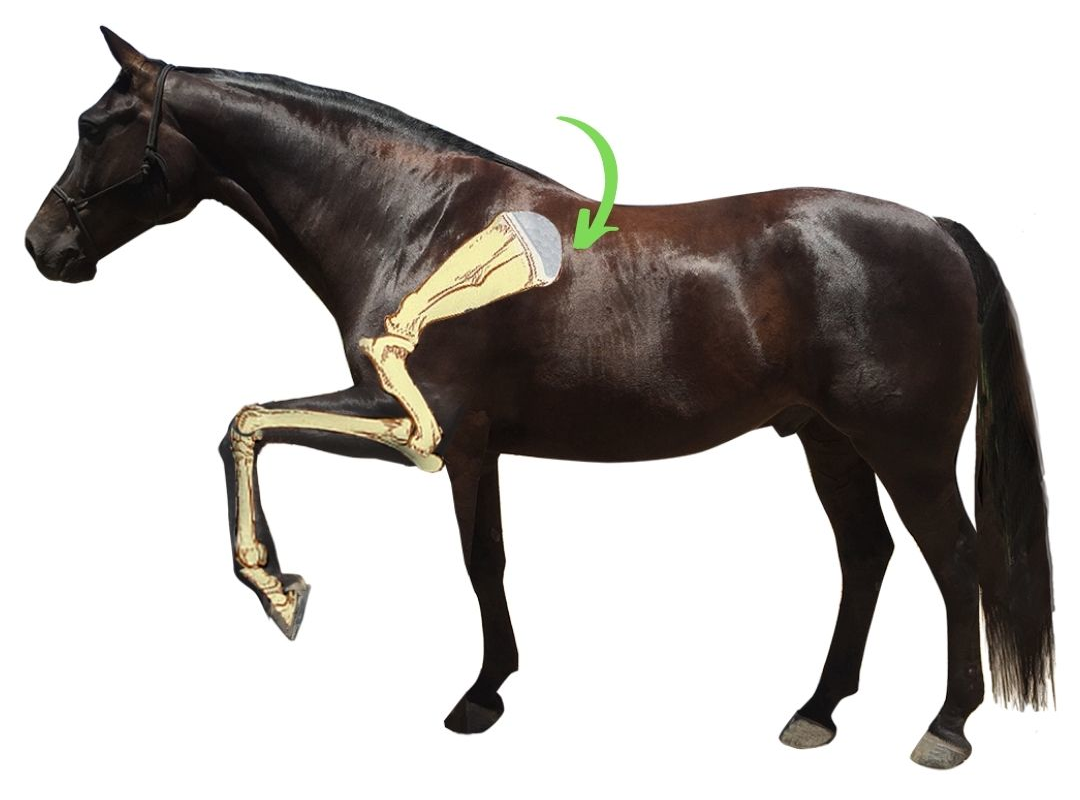
Saddle tree position on the horse's back and scapular movements
The positioning of the saddle on the horse’s backis critical to the horse’s comfort and performance. Improper positioning disrupts shoulder movement, which can lead to back pain and musculoskeletal disorders. This article therefore examines the impact of saddle fitting on the horse’s biomechanics and the importance of fitting the saddle correctly.
What is a saddle tree, and why is it important?
The tree, which is the rigid internal structure of the saddle, supports the rider’s weight and distributes the pressure across the horse’s back. It is therefore essential that the tree be adapted to the horse’s body type, both to prevent excessive pressure points and to allow for the necessary freedom of movement.
Anatomy of the Horse's Back and Scapular Movements
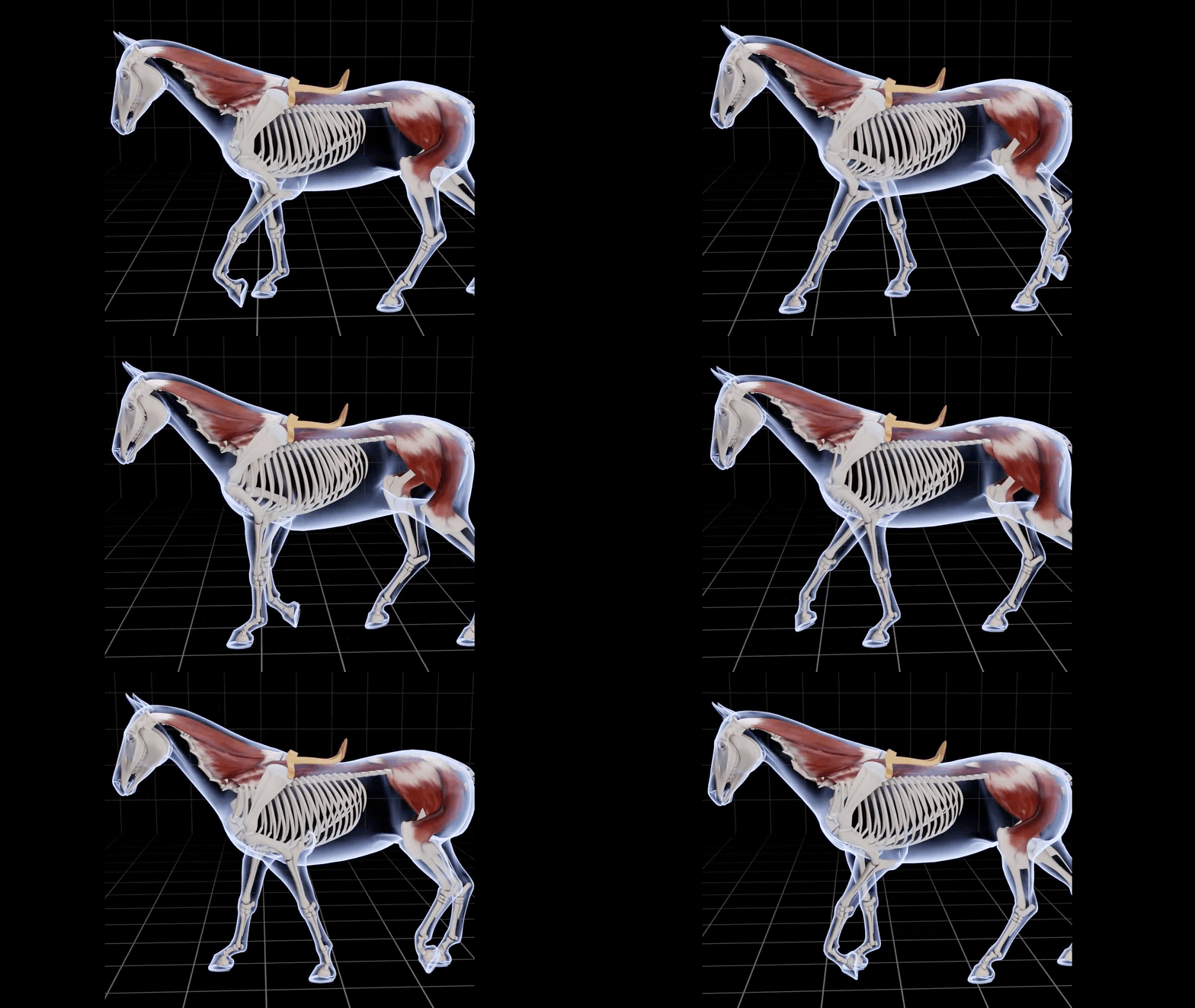
The scapula is a flat bone located on either side of a horse’s chest. It plays a vital role in the locomotion of a horse’s forelimbs. With each stride as the horse moves forward, the scapula rotates and moves backward; this movement can only occur in a free space.
The Impact of a Poorly Positioned Saddle on Scapular Movement
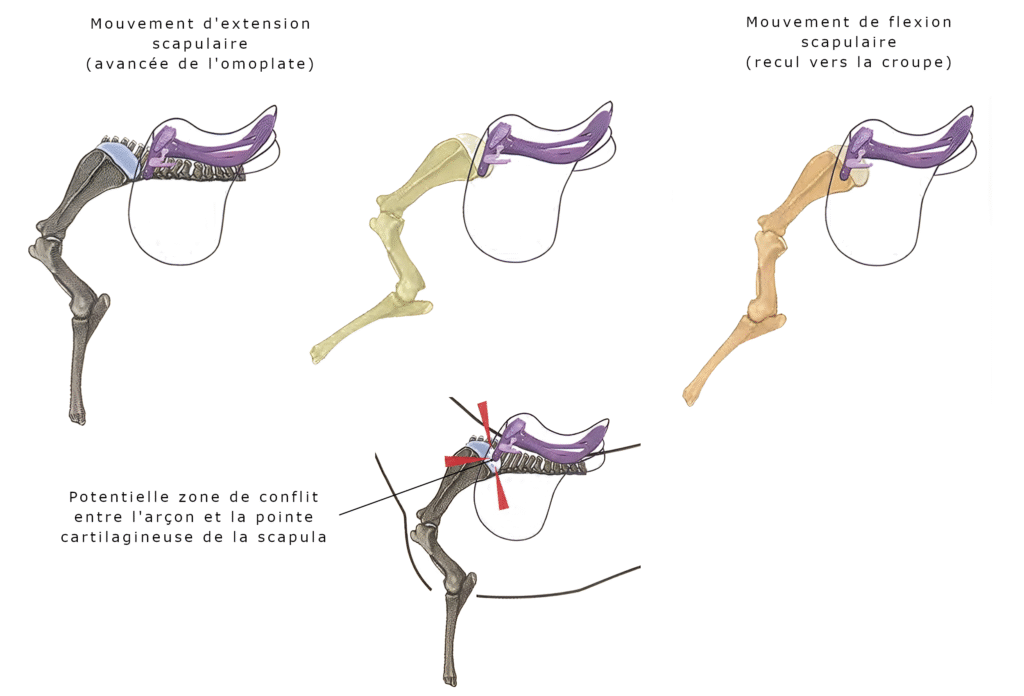
If the saddle pommel is positioned incorrectly at the withers (too far forward), it will interfere with the natural movement of the shoulder blades, limiting that movement and sometimes even causing pain. Over time, this restricted range of motion—which will lead the horse to compensate with its muscles—can result in injuries, back pain, and musculoskeletal disorders.
How do you determine the ideal position of the saddle?
To ensure the saddle is positioned correctly:
- Locate the scapula: Feel the horse’s scapula to locate its posterior edge.
- Positioning the saddle correctly: The tips of the pommel should be about two fingers’ width behind the rear edge of the shoulder blade.
- Check the length of the saddle: The back of the saddle tree should not extend beyond the last rib to avoid putting pressure on the lumbar vertebrae.
Consequences of an improper saddle position
An ill-fitting saddle can cause:
- Discomfort and pain: Compression of muscles and nerves, leading to back pain.
- Mobility issues: Abnormal gait and resistance to the rider's aids.
- Long-term injuries: Development of chronic muscle or skeletal injuries.
Adjustments and solutions for a properly fitted saddle
To ensure the best possible fit:
- Consult a professional saddle fitter: An expert can assess whether the saddle fits the horse’s body type.
- Choose adjustable saddles: Some saddles allow the tree to be adjusted to fit different horses.
- Use appropriate accessories: Shock absorbers or special mats can help distribute pressure evenly.
Signs of a poorly fitting saddle
Please note the following:
- Horse behavior: Restlessness, refusal to move forward, or unusual reactions when being tacked up.
- Physical signs: The appearance of patches of white hair, swelling, or tenderness on the back.
- Reduced performance: Difficulty performing movements that were once mastered, or decreased endurance.
The Importance of Regularly Checking the Saddle
A horse’s physique changes with age, training level, and overall health. It is therefore both useful and necessary to check how the saddle fits on its back to ensure that it is still a good fit.
Conclusion
The positioning of the saddle on the horse’s back is essential to the horse’s well-being and optimal performance. A saddle that is carefully fitted allows the shoulder blades to move freely and prevents any injury. A rider who cares about their horse’s comfort must take the time and effort to select the right saddle and ensure it is properly fitted.
Key takeaways
- Position of the saddle: Two fingers behind the shoulder blade.
- Saddle length: Do not extend beyond the last thoracic vertebra.
- Signs of discomfort: Unusual behavior, physical signs, decreased performance.
- Solutions: Consulting a professional, using the right accessories, and performing regular checks.
By following these principles, you will ensure your horse has optimal comfort and the freedom of movement essential to its well-being.