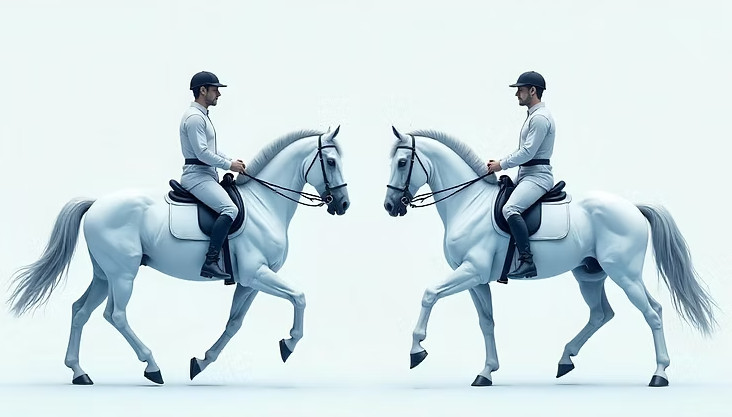
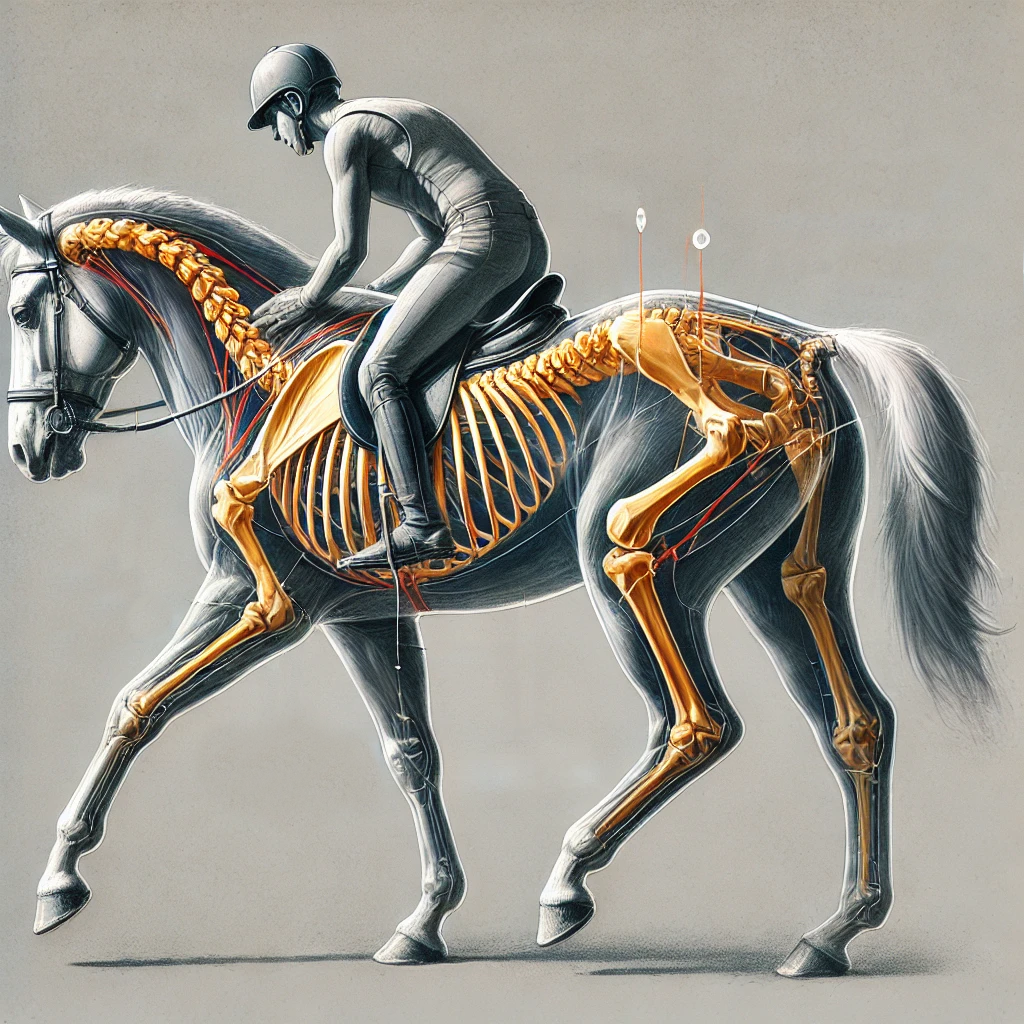
The interactions involved in riding : the rider's effects on the kinematics of the equine spine and on the saddle
Horseback ridingis a unique discipline. It is based on the symbiosis between human and animal—the rider, the horse, the saddle, andthe environment. All of these elements are, in fact, integral to the performance and well-being of the human-horse pair. The purpose of this article is to explore in depth how the rider’s actions affect the kinematics of the equine spineand saddle fit.
How does the rider influence the movement of the horse's back?
The riderplays a crucial role in the dynamics of horses. The rider’s posture, weight, and movements directly influence the horse’s movementand health. In fact, a study has shown that the rider affects not only the movement of the horse’s back under the saddle but also the mobility of its limbs.
Rider positions and their effects
- Full seat: The rider maintains constant contact with the saddle. This position increases pressure on the horse’s back, particularly in the middle sections, but also on the horse’s hindquarters.
- Lifting trot: With each stride, the rider lifts their seat out of the saddle, which reduces pressure on the horse’s back and promotes optimal freedom of movement.
- Balanced position: The rider sits slightly forward in the saddle, perfectly balanced on the stirrups to minimize impact on the horse’s back. This is a common posture in show jumping.
The Importance of the Rider's Seat
The rider's sitting position—known as their seat—is crucial for:
- Therider's balance .
- The forces exerted on the horse's back.
- The quality of the interaction between the rider and the horse.
A study has shown that the rider's ability influences the movement of their spine, which has implications for the horse.
For more information: IFCE Media Library.
What role does the saddle play in the rider-horse interaction?
As an interface between the rider and the horse, the saddle must be tailored to each individual’s body type to ensure optimal comfort and performance.
Consequences of a poorly fitted saddle
An ill-fitting saddle can cause:
- Painand stiffnessin horses.
- Limpingor muscle asymmetry.
- Defensive behaviorduring tethering or mounting.
It is therefore essential to check the saddle fit regularly.
The Effect of the Saddle on a Horse's Movement
The saddle tree, the central component of the saddle, plays a crucial role in distributing the rider’s weight. A study has shown that the saddle can be adapted to the rider-horse pair, thereby improving the horse’s movement.
How can a rider improve the mobility of the horse's spine?
To optimize the horse 's spinal movement, the rider should:
- Adjust your positionto match your horse's gait, depending on the exercise.
- provide a stable baseto support the horse's movement.
- Use a saddle that fitsboth the horse and yourself.
- Workwith various professionals (equestrian ergonomists, etc.) to optimize equipment and performance.
Conclusion
The interaction between the rider, the horse, and the saddle is crucial for harmonious riding. In this regard, the rider’s positionand the fit of the saddle are key factors in the horse’s health and performance. It is therefore important to pay attention to these elements to ensure the comfort of both rider and horse.
Key takeaways:
- The rider's position and movements are transmitted to the horse's back.
- A properly fitted saddle is essential for the horse's comfort and performance.
- Working with professionals can improve the fit between horse, rider, and saddle.